
Scaling & Root Planing in Burtonsville, MD
Deep Cleaning Treatment for Healthy Gums
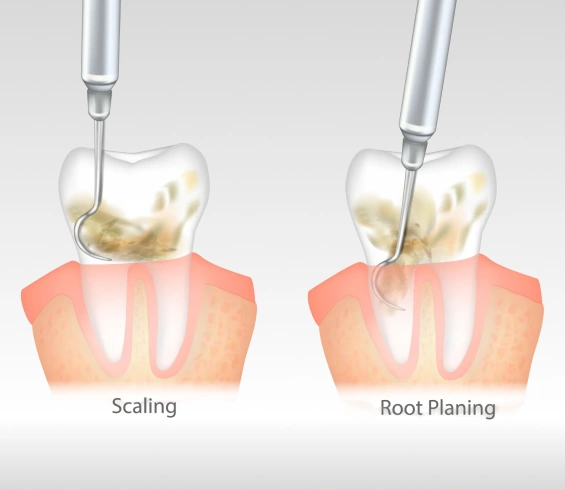
Scaling and root planing is a specialized, non-surgical deep cleaning procedure designed to treat gum disease by removing plaque, tartar, and bacteria from beneath the gum line. This treatment helps stop the progression of gum disease, restore gum health, and protect the tissues and bone supporting your teeth. It is often considered the “gold standard” for managing mild to moderate periodontal disease and preventing more serious complications, including tooth loss.
What is Scaling & Root Planing?
Scaling and root planing focuses on two key steps:
This procedure is recommended when gum disease has caused pockets to form between the teeth and gums. These pockets trap bacteria and plaque, leading to inflammation, infection, and potential damage to the bone supporting the teeth. Early intervention can prevent serious complications and may even reverse some gum damage.
Signs You May Need Scaling & Root Planing
If you experience any of these symptoms, a professional consultation is important to determine whether scaling and root planing is the right treatment for you.
The Scaling & Root Planing Procedure
The process typically includes three stages:
1. Evaluation and Diagnosis
2. Deep Cleaning Procedure
3. Aftercare and Recovery
Advantages of Deep Gum Cleaning
Why Choose Professional Care for Scaling & Root Planing?
Choosing professional care for scaling and root planing ensures that your gums are treated effectively, helping to prevent future complications and maintain long-term oral health and a confident smile.
Frequently Asked Questions
You may benefit from this deep cleaning if your gums are red, swollen, or bleed easily, if you have persistent bad breath, or if there is tartar buildup below the gum line.
The duration depends on the extent of treatment required. Some patients complete it in a single visit, while others may need two or more appointments.
Mild tenderness or soreness is normal for a few days. Rinsing with warm salt water and following your dentist’s aftercare instructions can help reduce discomfort.
Most patients need it just once to address gum disease, but individuals with recurring gum issues may require follow-up maintenance cleanings every few months.