
A recessed lower jaw—also known as a retruded mandible or overbite—can affect more than just your smile. It may influence your bite, facial profile, speech, and even long-term oral health. Many patients exploring orthodontic options at Drewyer Dentistry often ask a common question:
Can Invisalign correct a recessed lower jaw?
Let’s break down what Invisalign can and cannot do, who it’s best suited for, and how patients in Burtonsville, Maryland, USA can determine the right treatment path.
Understanding a Recessed Lower Jaw
A recessed lower jaw occurs when the lower jaw sits further back than the upper jaw. This condition can be genetic or develop over time due to bite misalignment, habits, or jaw development issues during childhood.
Common signs include:
- A noticeable overbite
- Chin appearing smaller or set back
- Difficulty chewing certain foods
- Jaw strain or discomfort
- Speech challenges in some cases
While mild cases are often dental in nature, more severe cases may involve skeletal discrepancies.
How Invisalign Works
Invisalign uses a series of clear, removable aligners that gradually shift teeth into better alignment. These aligners are custom-made using digital scans and are replaced every one to two weeks as treatment progresses.
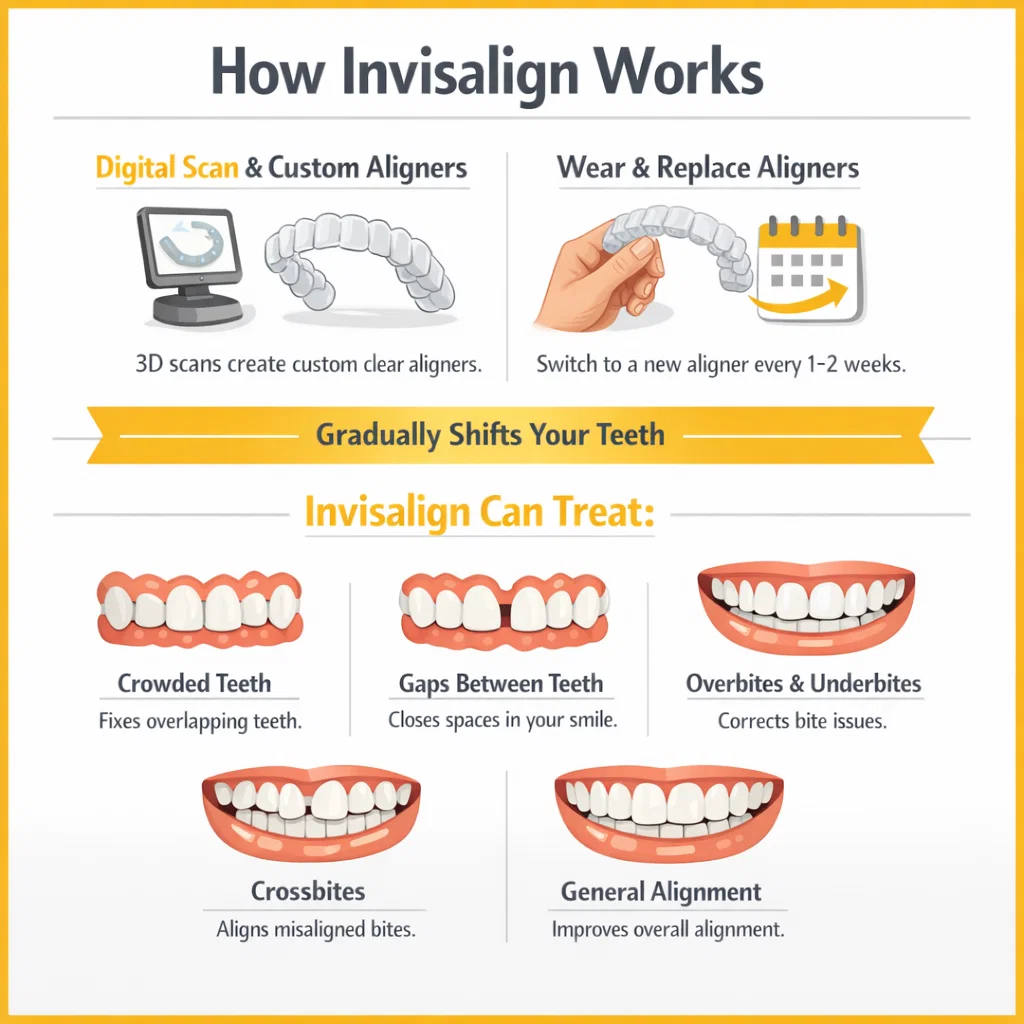
Invisalign is commonly used to treat:
- Crowded teeth
- Gaps between teeth
- Overbites and underbites (mild to moderate)
- Crossbites
- General alignment issues
The treatment focuses primarily on tooth movement, not direct bone repositioning.
Can Invisalign Move the Lower Jaw Forward?
Invisalign can help improve the appearance and function of a recessed lower jaw, but with some important limitations.
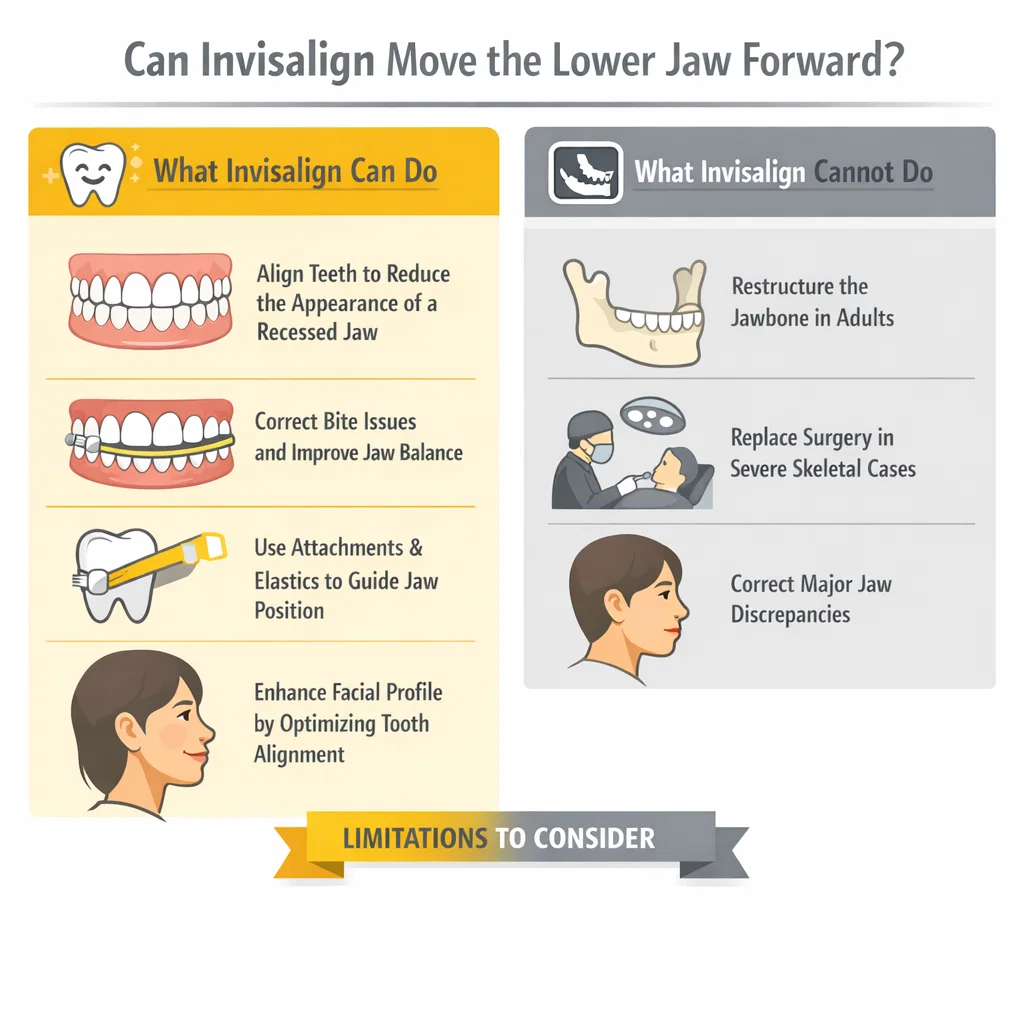
What Invisalign can do:
- Improve the alignment of teeth to reduce the appearance of a recessed jaw
- Correct bite issues that contribute to jaw imbalance
- Use attachments and elastics to guide jaw positioning in certain cases
- Create a more balanced facial profile by optimizing tooth alignment
What Invisalign cannot do:
- Physically move or restructure the jawbone in adults
- Replace surgical correction in severe skeletal cases
- Fully correct significant jaw discrepancies on its own
For mild to moderate cases, Invisalign—sometimes combined with rubber bands (elastics)—can encourage better jaw alignment and bite positioning. However, severe cases may require orthodontic treatment in combination with oral surgery.
Treatment Options Based on Severity
Understanding the severity of your condition is key to choosing the right approach:
Mild Cases
- Invisalign alone may be sufficient
- Focus is on aligning teeth to improve bite function
- Subtle improvement in jaw appearance
Moderate Cases
- Invisalign with elastics or attachments
- Guided tooth movement can help adjust bite relationships
- Noticeable functional and aesthetic improvement
Severe Cases
- May require orthodontics + orthognathic (jaw) surgery
- Invisalign may be used before and/or after surgery for alignment
A comprehensive consultation at a dental office like Drewyer Dentistry in Burtonsville can help determine the most effective treatment plan.
Benefits of Using Invisalign for Jaw-Related Concerns
Patients considering Invisalign for a recessed lower jaw often appreciate the following benefits:
- Clear and discreet appearance
- Removable aligners for eating and cleaning
- Improved bite function over time
- Customized treatment planning using digital technology
- Fewer office visits compared to traditional braces
Additionally, improved alignment can reduce uneven wear on teeth and help prevent future dental complications.
What to Expect During Consultation
If you’re considering Invisalign for a recessed lower jaw, here’s what typically happens during a consultation:
- Digital scans or impressions of your teeth
- Bite and jaw assessment
- Discussion of your goals and concerns
- Evaluation of whether Invisalign alone is sufficient
- Treatment plan outlining duration and expected results
At Drewyer Dentistry, consultations are designed to be informative and patient-focused, helping you make a confident decision.
Tips for Patients Considering Treatment
- Be consistent with wearing aligners (20–22 hours per day)
- Follow instructions for elastics if prescribed
- Maintain good oral hygiene
- Attend scheduled check-ups
- Communicate any discomfort or concerns early
Consistency plays a major role in achieving optimal results.
Take the Next Step Toward a Better Bite and Smile
If you’ve been wondering whether Invisalign can help with a recessed lower jaw, the answer depends on your individual case. While it may not physically reposition the jawbone, it can significantly improve alignment, bite function, and overall appearance for many patients.
For personalized guidance and a treatment plan tailored to your needs, consider scheduling a consultation with Drewyer Dentistry. A professional evaluation is the first step toward understanding your options and achieving a healthier, more confident smile.
Frequently Asked Questions (FAQs)
1. Can Invisalign fix a recessed chin?
Invisalign cannot physically move the jawbone, but it can improve the appearance of a recessed chin by aligning the teeth and improving bite balance.
2. Will Invisalign change my facial profile?
Yes, in many cases. While it doesn’t alter bone structure, improved tooth alignment and bite positioning can enhance overall facial harmony.
3. How long does treatment take?
Treatment duration varies depending on complexity. Mild cases may take several months, while more complex cases can take 12–24 months.
4. Do I need surgery for a recessed lower jaw?
Not always. Mild to moderate cases can often be managed with Invisalign and orthodontic techniques. Severe skeletal discrepancies may require surgical evaluation.
5. How do I know if Invisalign is right for me?
A professional evaluation is the best way to determine suitability. A consultation at Drewyer Dentistry in Burtonsville can help assess your condition and recommend the appropriate treatment.