

Missing teeth can make even the simplest meals feel difficult. It’s tough enough to chew vegetables, meats, and crispy snacks without any teeth, but it’s even worse for your health and self-image. If you have been considering tooth replacement, it might be beneficial to learn how dental implants work so you can make a more informed decision about your own teeth.
Dental implants resemble real teeth in structure and function but differ from removable options in that they are surgically placed into the jawbone and become integrated as a functional, stable base for crowns or bridges to rest on. This allows you to chew, speak, and keep your mouth clean as though you still have some of your natural teeth.
How Missing Teeth Affect Chewing and Nutrition
With teeth missing, your bite changes as it is no longer in alignment with the opposing teeth, therefore making it increasingly difficult to break down food when chewing properly. Over time, poor chewing can affect your nutritional status (e.g., by causing nutritional deficiencies) and disrupt your digestive system. Some adults in Burtonsville, MD, who have lost teeth report avoiding hard or fibrous foods due to their inability to chew effectively, which causes them to miss out on essential nutrients from protein, fiber, and vitamins.
The restoration of your ability to chew with stable dental implants, is critical to regaining functional chewing. Additionally, dental implants help retain or preserve the integrity of the jawbone, preventing subsequent oral problems.
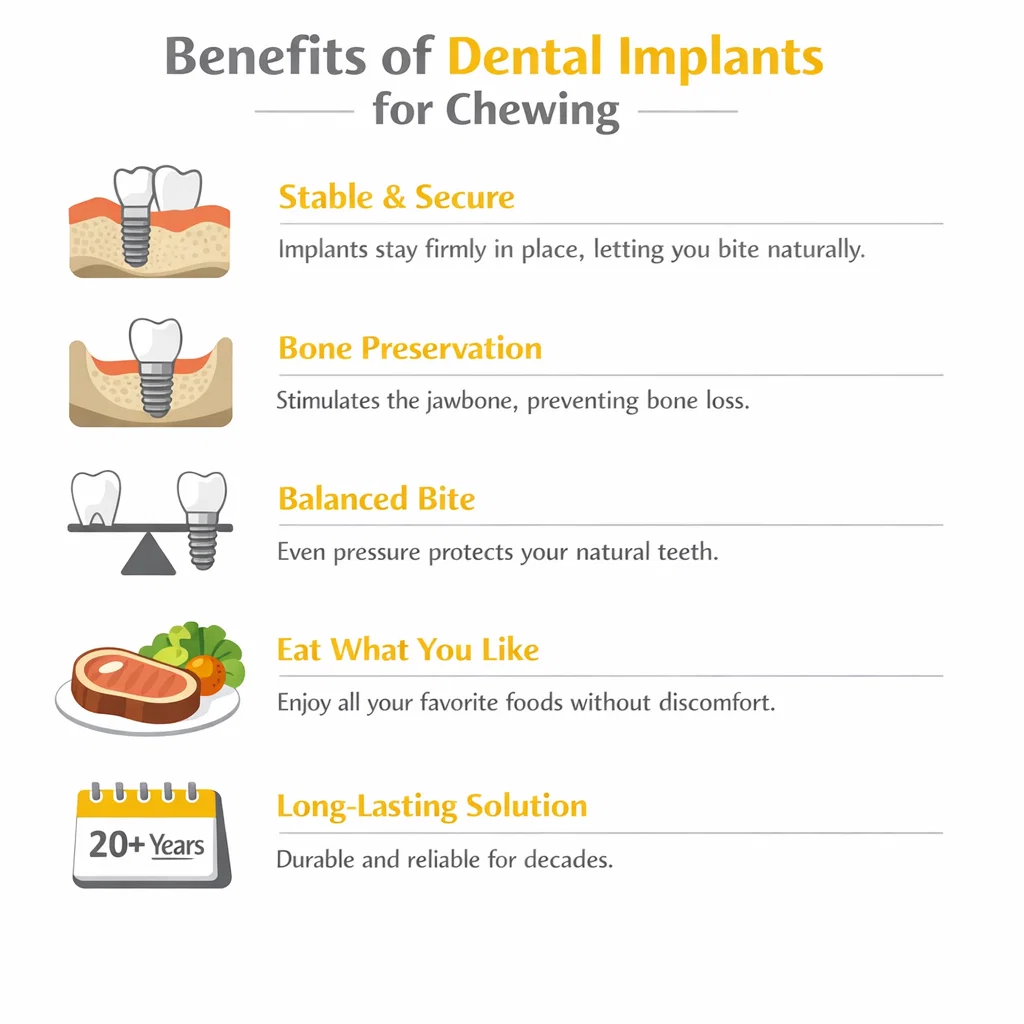
Benefits of Dental Implants for Chewing
Dental implants offer numerous benefits over traditional removable dental appliances. These benefits include:
- Stability: Because the implants are fixed securely in your jawbone, they do not move, which means you can bite naturally.
- Preservation of Bone: Because the implant stimulates your jawbone, it helps to avoid the loss of bone that occurs when you are missing a tooth.
- Balanced Bite: With evenly distributed chewing forces from the implant, you will experience less wear and tear on your remaining natural teeth.
- Food Flexibility: You can eat any food (raw vegetables or lean meat) without discomfort.
- Long-term Solution: If you take care of your dental implants, they can last 20-30 years due to their durable materials, making them a good long-term investment in your oral health.
The Implant Process in Simple Terms
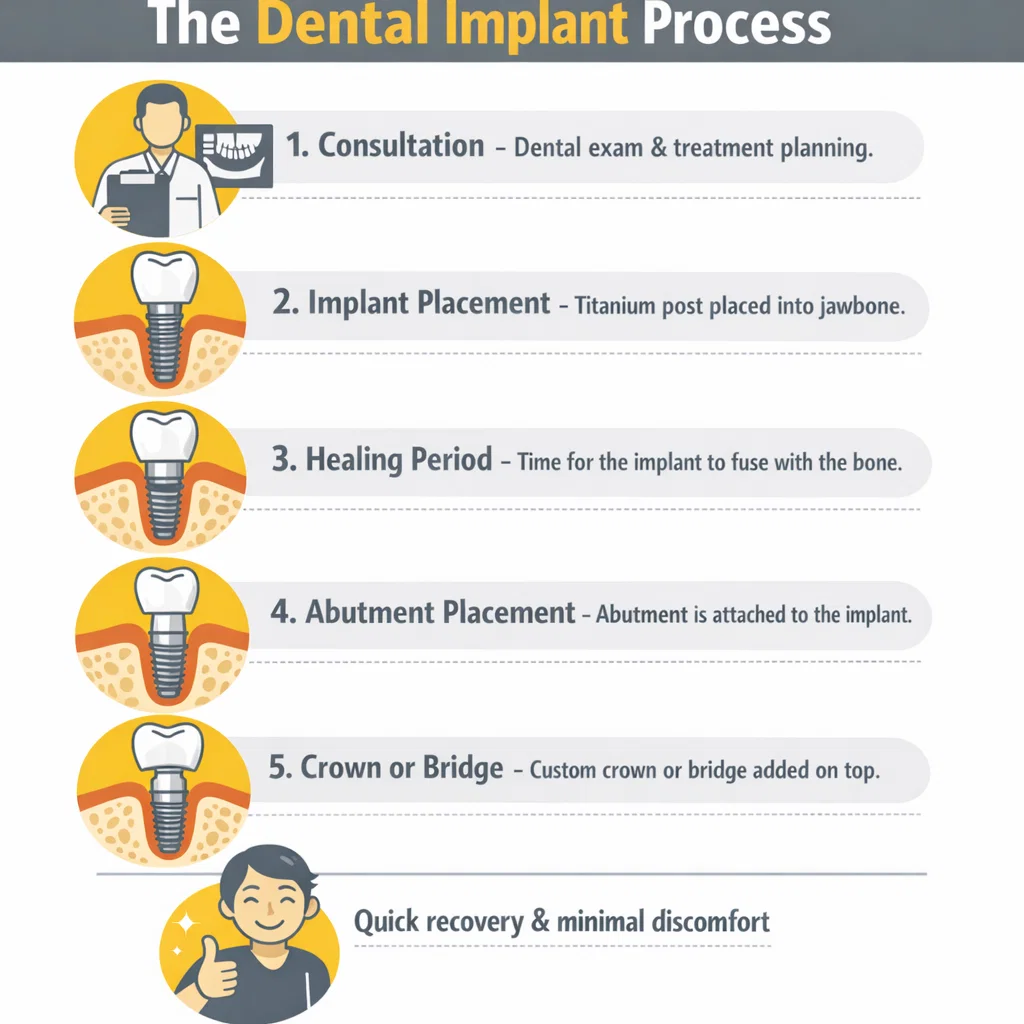
The dental implant procedure is simple and can be broken down into the following four stages:
1. Consultation – Your dentist will examine your bone structure, oral health, and overall treatment goals.
2. Implant Placement – A small titanium post will be placed into the jawbone to serve as a replacement for the tooth root.
3. Healing Period – Over the next few months, your jawbone will attach itself to the implant through a process called osseointegration.
4. Placement of Abutment – The abutment connects to the implant, creating a surface to which the crown or bridge will be attached.
5. Placement of Crown or Bridge – A crown/bridge will be custom-made and attached to the abutment, restoring your ability to chew normally.
The majority of patients resume their normal daily activities soon after the procedure and experience very little discomfort.
Comparing Implants to Other Tooth Replacement Options
While dentures and bridges are common alternatives, dental implants offer unique advantages for natural chewing:
- Dentures: Removable and sometimes unstable; require adhesives; limited in bite strength.
- Fixed Bridges: Depend on neighboring teeth for support, which may compromise healthy teeth.
- Dental Implants: Standalone solution; support jaw health; provide maximum chewing efficiency.
In practical terms, implants feel closer to natural teeth, reduce dietary restrictions, and protect oral structure.
Caring for Your Implants
Dental implants are low-maintenance, but they must be cared for regularly.
- Brush twice daily with a soft-bristle toothbrush.
- Flossing helps remove food and plaque from above and below the gum line.
- Periodontal health can be assessed by visiting the dentist every six months.
- Refrain from smoking or chewing hard things that can jeopardize the implant.
The care and maintenance of implants are similar to natural teeth; therefore, incorporating them into your routine should be no problem.
Additional Health Benefits
Dental implants enhance your chewing power and overall body health.
- Prevent bone loss associated with missing teeth.
- When the teeth are stable, slurring or clicking sounds caused by gaps are removed.
- Natural-looking teeth lead to increased confidence when eating, speaking, and socialising.
- When food is chewed well, it helps with nutrient absorption and the comfort of the digestive tract.
For adults in Burtonsville, MD, these benefits can improve quality of life and long-term wellness.
Signs You Might Benefit from Dental Implants
Not everyone with missing teeth automatically qualifies for implants. Signs that implants may help include:
- Difficulty chewing or biting certain foods
- Gaps causing neighboring teeth to shift
- Jawbone weakening or receding in areas of missing teeth
- Desire for a permanent, fixed solution over removable options
A dentist can assess your suitability, including bone density and oral health, and guide you through the best course of treatment.
Conclusion: Take the Next Step Toward Restored Chewing Power
Thinking about restoring your chewing function? If you live in Burtonsville, MD and are considering a long-lasting solution for missing teeth, schedule an appointment with Drewyer Dentistry to discuss how we can restore your chewing ability with dental implants based on your individual situation.
Our team of professionals offers cutting-edge technology, expert advice, and compassionate care so you can confidently enjoy any food you choose. We’re proud to help patients in Burtonsville and nearby communities regain comfort, function, and confidence with personalized dental implant treatment.
Common Questions People Ask
1. How long does it take for dental implants to heal fully?
Healing typically takes 3–6 months for the bone to fuse with the implant. Individual recovery times vary based on oral health and procedure complexity.
2. Are dental implants painful?
Most patients report only mild discomfort during and after the procedure. Local anesthesia and sedation options make the process manageable.
3. Can anyone get dental implants?
Candidates need adequate jawbone density and healthy gums. A dental professional can evaluate your suitability during a consultation.